
New Zealand's Specialist Hot Water Heat Pump Installer
Serving Wellington, Hutt Valley, Wairarapa, Kapiti, Horowhenua & Manawatu
Serving Wellington, Hutt Valley, Wairarapa, Kapiti, Horowhenua & Manawatu
Hot water is a daily comfort in New Zealand homes. However, this simple and common aspect of any Kiwi home can become a heavy financial burden if overlooked.
Many people look only at gas prices and miss the fixed daily line charges that apply even if you use very little gas. These ongoing costs add up over the year, so gas water heating often costs more than it seems.
At A2W, we help homeowners understand the real costs behind different systems.
This guide explains:
Gas bills usually include two main parts:
Even if a home uses gas only for water heating or cooking, the fixed charge remains. These connection fees cover the cost of maintaining pipelines and network infrastructure. As more homes switch to electric systems, those costs are spread across fewer users, increasing line fees per household.
Households often expect lower bills after reducing gas use, but the fixed charge doesn’t disappear. This means even low-usage homes continue to pay for network maintenance, turning gas into one of the more expensive utilities over time.
Hot water accounts for about one-third of the average home’s energy use, according to energy research and A2W’s own findings. When you add line charges to usage costs, the real price of gas hot water goes up quickly.
By comparison, electric heat pumps don’t rely on a separate gas network. You pay for the power you use, nothing more.
When you factor in line fees and maintenance, gas systems are often less economical than they seem at first glance.
Electricity pricing offers more flexibility through off-peak plans and renewable sources. Gas, meanwhile, keeps a fixed connection cost regardless of consumption. This makes the switch to electric water heating an easy way to cut ongoing expenses without compromising comfort.
Many New Zealand homes were built with gas water heaters, so sticking with them feels familiar. Yet when efficiency and cost are compared side by side, heat pumps outperform gas in nearly every aspect.
| Gas Water Heater | High energy use due to combustion loss | Requires ongoing line fees |
| A2W Hot Water Heat Pump | Uses up to about 70% less energy than gas | No line fees, runs on electricity |
Our A2W hot water heat pump systems draw heat from the air and transfer it into the water in your cylinder. By moving heat instead of generating it, they use far less energy than gas or standard electric systems.
Modern refrigerants, such as R290 and CO₂, allow reliable operation even in cooler climates while keeping their global warming potential low. The result is steady, efficient performance for everyday household needs.
New Zealand’s gas network was built when most homes relied on gas for heating and cooking. Today, with more households moving to electric systems, the network costs more to maintain per household.
Gas pipes, meters, and distribution stations still need to be inspected, replaced, and upgraded to meet modern safety standards. These are ongoing costs that don’t decrease when usage does. Instead, they are shared among the remaining users, which raises the fixed portion of each customer’s bill.
For homeowners, this means that even if gas usage remains low, line charges and connection costs could continue to increase. The shift away from gas is already well underway, and those who stay connected may shoulder a larger share of system costs in the future.
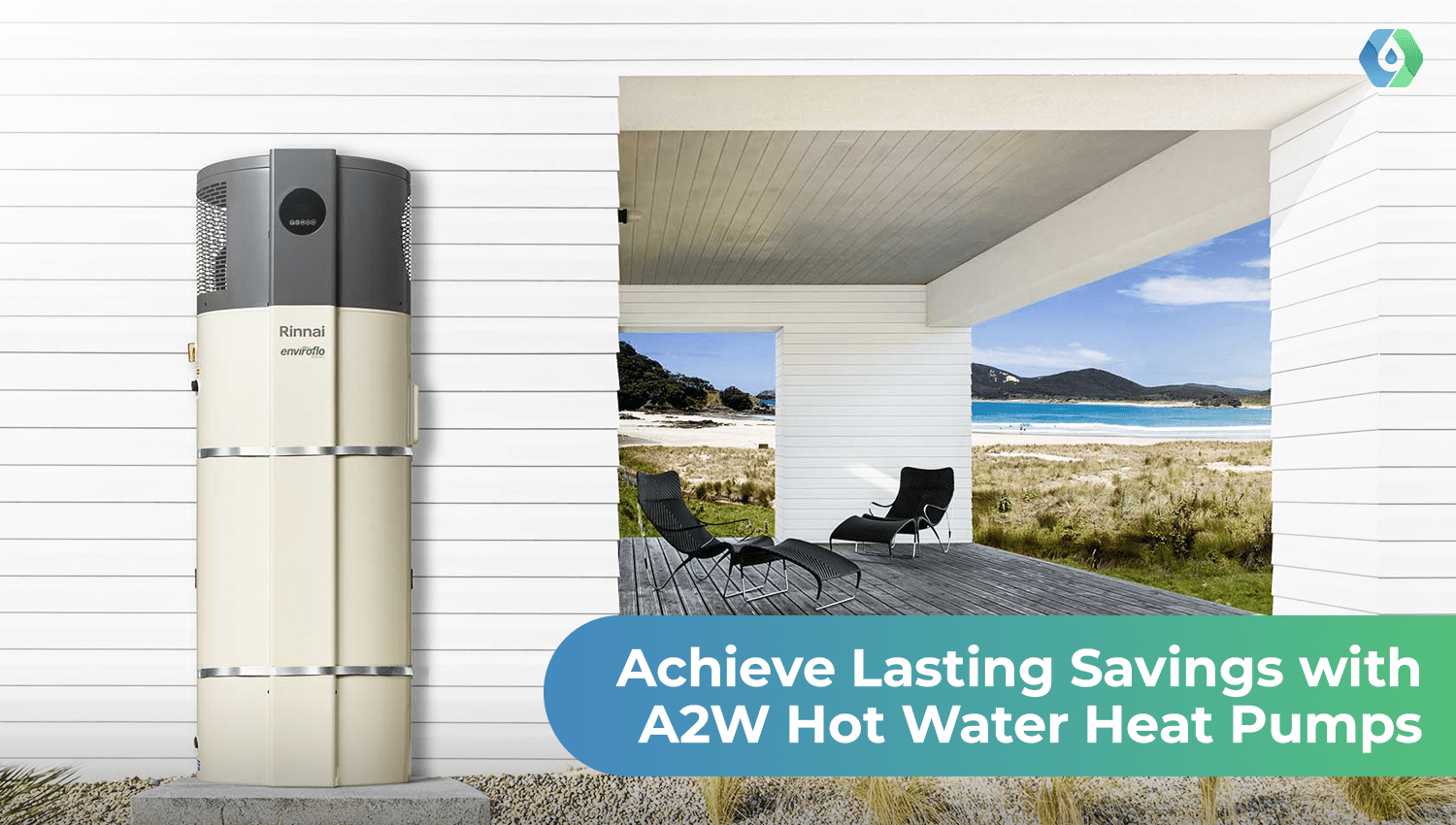
At A2W, we design systems for New Zealand’s unique conditions, from coastal humidity to cold mornings in the lower South Island. Our heat pumps use advanced refrigerants and energy-efficient compressors to provide reliable hot water and lower overall energy use.
New Zealand’s electricity grid already gets much of its power from renewable sources, such as hydro, wind, and geothermal. By choosing an electric heat pump instead of gas, homeowners help support cleaner energy use. This is on top of being the most energy-efficient hot water system for NZ homes.
Every home that switches to electric water heating reduces demand for gas imports and pipeline maintenance. This shift helps stabilise electricity demand and promotes further investment in renewable generation across the country.
New Zealand’s energy transition is well underway. Government strategies, including carbon-reduction targets and renewable-energy incentives, continue to encourage homeowners to electrify household systems.
Early adopters already enjoy steady savings, less maintenance, and peace of mind knowing their system supports a cleaner national grid. As renewable power grows, these benefits will only increase, making heat pumps the best choice for the future of hot water in New Zealand homes.
Transitioning from gas to a heat pump is straightforward when done with the right guidance.
A2W’s trained technicians make sure every system runs at its best. After installation, homeowners only need to do simple upkeep, like keeping the outdoor unit clear of debris and checking filters.
When the total cost of When you look at the total cost of ownership, including line charges, fuel use, and maintenance, gas hot water often turns out to be one of the most expensive options to keep running.mp, you:
Beyond the connection fees, staying on gas can bring other expenses:
When all these are combined, the hidden costs of gas hot water systems in NZ become clear. It’s then easy to answer the question, “Why are NZ gas line fees increasing?”

We understand that switching systems is a big decision. That’s why we help homeowners every step of the way.
Our team provides:
We focus on practical solutions, helping you find the most energy-efficient hot water system for NZ homes without unnecessary jargon or complexity.
Switching from gas to electric water heating isn’t just about cutting costs. It’s about thinking ahead. Every household that leaves gas behind helps lower national emissions and supports a cleaner, more stable energy network for New Zealand.
Gas line charges are the quiet expense that never leaves the bill, even when usage drops. They keep households tied to infrastructure costs that no longer make sense for modern, efficient homes.
By choosing an A2W hot water heat pump, you remove those fixed fees, reduce your running costs, and enjoy dependable comfort year-round. It’s a simple switch that benefits both your wallet and the environment.
A smarter home uses energy wisely, and with A2W, that begins with how you heat your water.

Privacy Policy | This site is protected by reCAPTCHA and the Google Privacy Policy and Terms of Service apply.
Thank you! We need your help. Would you share your experience on one of these sites?

